
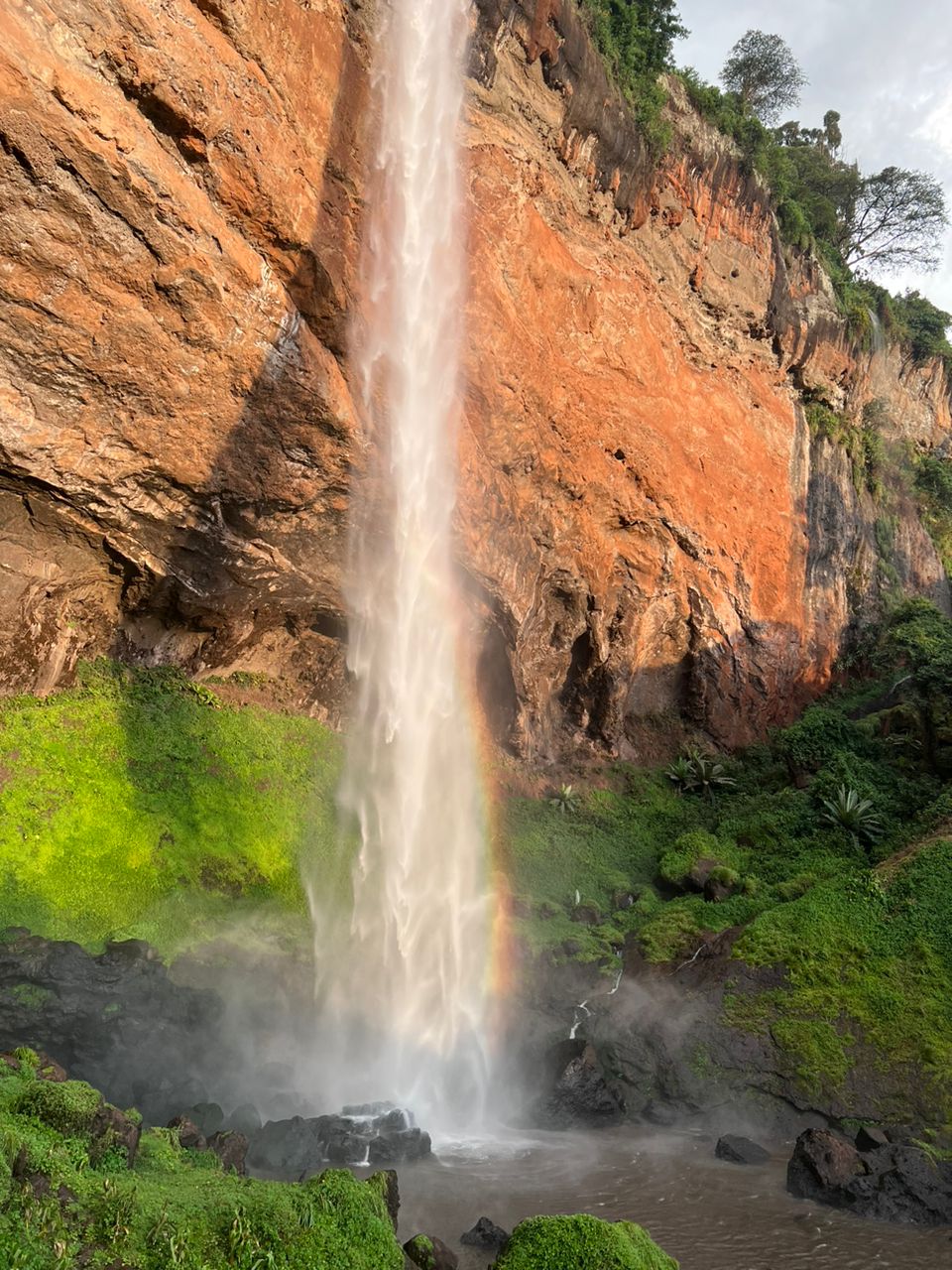
When you hear the word Uganda, if you’ve never been there, the first thing that comes to mind is Idi Amin and perhaps the more recent civil unrest in the north. Well, I certainly associated Uganda with these things, but when I visited the country last month, it painted a different story altogether. Now, when I think about Uganda, I think of lush green hills, white-water rafting (on what are apparently, the second-best rapids in the world), gorilla safaris—which I wished I’d done—and the incredibly friendly people.
Editor’s Note: This post was written by guest contributor Meera Ashish.
So, given how much Uganda has to offer, why is it not a tourist hot spot? Well, I definitely met tourists while traveling around the country, but why isn’t Uganda on the tourist map as much as, say, Kenya or Tanzania? Of course, the quality of safaris that the latter two countries offer are unrivaled, however, if you go to the right places in Uganda, you’ll certainly get to see the Big Five. When I visited Murchison Falls, I managed to see two lionesses and one majestic lion from up close on my very first day. When I say close, they were just steps away from our jeep: sitting, lazing, and yawning. One thing’s for sure, traveling by road to Murchison Falls—or anywhere else in the country—can be a little tiring, though simultaneously eye-opening. On the other hand, if you want to take a plane, it might pinch your pockets. Therefore, it definitely doesn’t help that traveling within the country is either long or expensive.
Regardless of all this, I think the lack of tourism here stems from a lack of exposure in the media. Yes, Uganda may have its own problems, just like any other country, but the government here needs to dedicate a team and invest capital into marketing the nation. No matter how much a country has to offer, if the average person living in another part of the world doesn’t hear anything about it—aside from watching The Last King of Scotland and assuming that Uganda still hasn’t quite recovered from the despotic leader it had so many years ago—then how can that country expect to attract high numbers of tourists?
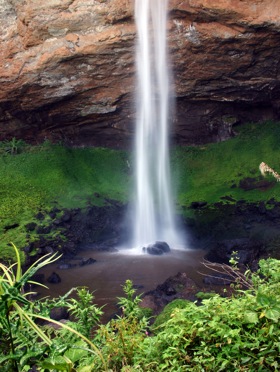
Sipi Falls
And it isn’t just the game parks, the gorillas, and the Nile that can attract tourists. Kampala, the capital city of Uganda, is bustling with activity. It was a good place to start from—but also fascinating for understand the growth potential here after learning that Uganda has found barrels and barrels of oil. I wondered how different it would look in ten years with all the oil money.
Apparently, people say that the land in Uganda is so fertile that anything you put in the soil will grow and bloom. Well, all the food I ate here certainly tasted extremely fresh and organic. The staple food—a stodgy and mushy matoke mixed with groundnut soup and a side bean—might look bland and a little grubby, but it tastes pretty good. And some of the best dishes you’ll find being are cooked on the streets, ranging from fresh, hot cassava to something called a rolex—a rolled, a up fluffy egg chapati. I had this—without the egg—while quad-biking through a village in Jinja. Nothing could have tasted better!
The quad biking route actually overlooks the rafting on the Nile. Having never rafted before, I still have a lot left to little experience next time—which means I still have a lot left to experience next time. The best part is I’m coming back at the end of this year for a bike ride from the famous Sipi Falls to Kampala to raise money for secondary schools in Uganda. Cycle4Uganda is hoping to attract a hundred people from around the world to participate in this 350 km (217 miles) bike ride over the New Year period.
The route will take in some of the most scenic spots in the region. Beginning at the imposing the imposing Tororo Rock, an ancient volcanic plug, the trail leads into the foothills of the magnificent, extinct Mount Elgon. There, we will view the spectacular Sipi Falls—a series of waterfalls with massive drops the mountain’s waters cascade down.
Halfway through the ride, there is an action-packed ‘day-off’ in Jinja, so I’ll be white-water rafting then. The route finishes as we leave behind our bikes on the lakeshore and taking a small boat across Lake Victoria to a resort in Kampala, the capital city. We’ll be passing not only through the rural countryside but also through several bustling towns. And of course, it’s going to be warm (apparently it has a warm climate all year round as it sits on the equator).
The bike ride is aiming to raise £150,000 or $230,000 ($198,500 to$304,500) to help secondary schools in Uganda. This will be done through an innovative program devised by Mara Foundation, a charity based in Uganda. Instead of just spending money on a school and leaning, the Mara Foundation partners with schools long-term to help them develop new solutions for providing better education. The charity is quite unique—it recognizes the importance of good facilities and raises money to build them, but it also acknowledges that good facilities are only a small part of a quality education. The foundation has already partnered with two schools and hopes to scale the program up to ten schools in the coming year.
If you want to join the bike ride this New Year, sign up at Cycle4Uganda.
Featured image © Quack3142
Article Photo © Meera Ashish
_________________________________________________________________________________________________
 Meera Ashish is a weekly travel columnist for Gulf News, Dubai and contributes to various publications including Bazaar, Conde Nast, Spa Secrets, Epoch Times and Travel Plus. Her guide to Dubai was recently published in the UK, and while she was born and brought up in London, she now splits her time between Uganda and Dubai — well, that’s when she’s not journeying around the world.