The Best Cupcakes in Park Slope
June 27, 2011 by Gennaro
Filed under Food, Travel News
The Park Slope neighborhood in Brooklyn is home to several of the tastiest cupcakes in New York City. Bakeries have been competing for two decades to win over the growing customer base for the small cake designed to satiate one person. Three Park Slope spots have developed cupcakes that would satisfy even the toughest critics.
Butter Lane Cupcakes, Park Slope, Brooklyn © Gennaro Salamone
Butter Lane Cupcakes recently opened a Park Slope location after years in the East Village. Their French and American buttercream icing is extraordinary especially on top of a Sea Salted Chocolate cupcake. The general feel of the place is a lot better than the previous occupant — King of Cupcakes. There is a bench for two in front of the shop that might remind Sex and the City fans of the one Carrie and Miranda sat on in a July 2000 episode while munching on cupcakes and chatting about Carrie’s new crush on Aiden.
A little further down 7th Avenue is Crespella, which specializes in crepes, but is also a retailer for Robicelli’s cupcakes. Found in locations throughout the city, Robicelli’s has delectable flavors including S’Mores, cheesecake buttercream, and apricot chardonnay cake. For chocolate lovers, head over to Ladybird Bakery (formerly Two Little Red Hens Bakery) on 8th Avenue for their Brooklyn Blackout cupcake. It consists of chocolate cake, chocolate pudding, chocolate frosting, and lots of chocolate sprinkles across the top.
Read about the best chocolate in NYC or view tasty candy bar cupcakes.
___________________________________________________________________________________
Gennaro Salamone is the founder and editor of Enduring Wanderlust. Feel free to contact him with questions, comments, or inquiries with reference to contributing an article or photograph for publication.
Receive our free content by e-mail directly to your inbox or through an RSS reader.
8 Funny Travel Books
June 1, 2011 by Gennaro
Filed under Destinations, Features, Travel Gear
There is nothing better than finding a reason to laugh on the road. The following eight books are some of the funniest travel books ever written. The list includes something for every sense of humor and range from the Victorian period to the present day.
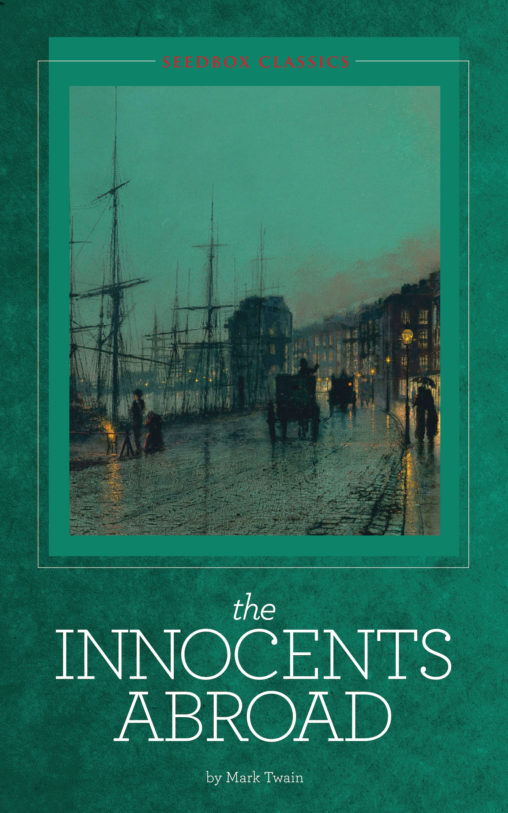
1. The Innocents Abroad (Mark Twain)
The Innocents Abroad was Mark Twain’s witty account of a grand tour of Europe and the Holy Land with a group of travelers in the 1860s. Unlike his better known masterpiece, The Adventures of Huckleberry Finn, Twain’s travel book is based on true events. Twain provides humorous and controversial observations about the people he encounters at each of the locations including Italy, France, and the Holy Land. In addition, Twain gives interesting insights into the human condition. Not to mention some funny jabs at the elites.
2. In a Sunburned Country (Bill Bryson)
Bill Bryson is one of the funnier modern-day travel writers. He manages to bring humor to his readers with a combination wit and thoughtful observations. In a Sunburned Country is one of the rare books that manages to poke fun at a country [Australia] and honor it as a great destination at the same time. Bryson’s run-ins with dangerous local animals and take on Australian rules football were particularly funny.
Badlands, South Dakota © Julie Falk
3. Holidays in Hell: In Which Our Intrepid Reporter Travels to the World’s Worst Places and Asks, What’s Funny About This (P. J. O’Rourke)
Holidays in Hell follows the travels of P. J. O’Rourke to what he believes are the hellholes around the globe. Unlike Bryson, O’Rourke’s observations are harsh and won’t win him any friends in the countries he wrote about. If political and cultural opinions given in a no-holds-barred manner work for you — this travelogue will have you either laughing or steaming. Note that it was written in the 1980s so some of the material is dated.
4. Travels with Alice (Calvin Trillin)
Travels with Alice is one of the funnier travel book you’ve never heard of. While Trillin is a well-known humorist, this gem is his only foray into the travel genre. The book consists of fifteen essays that follow Trillin and his family as they travel in search of the elusive treasures of Europe and the Caribbean. It provides funny insights into traveling with family along with unique observations about each location. The Gelati Fever chapter was a favorite in the book.
5. The Clumsiest People in Europe (Todd Pruzan)
The Clumsiest People in Europe is more about laughing at the author and the time period than chuckling about the cultural slurs that are tossed around in this Victorian period children’s guide to the world by Favell Lee Mortimer. No country or group of people escaped the nastiness of Mrs. Mortimer from the French and Portuguese to the Australians and South Africans. Makes one happy to be living in the 21st century.
New York City subway © Jens Schott Knudsen
6. There’s No Toilet Paper on the Road Less Traveled (Doug Lansky, Editor)
The only collection on this list of funny travel books, There’s No Toilet Paper. . .on the Road Less Traveled is a nice way to gauge which writers give you belly laughs. The short stories range from Failing to Learn Japanese in Only Five Minutes to The Art of Riding a Third World Bus. Most of the stories are light hearted and focus on the mishaps of each writer verses culture judgements. The tale about getting locked in a Dutch bathroom is priceless.
7. Westward Ha! (S. J. Perelman)
Westward Ha! is a humorous jaunt around the world taken by S. J. Perelman (wrote for The New Yorker) and caricaturist Al Hirschfeld. Written decades ago, it is another lesser known travel book that was written before the advent of political correctness. That said, Perelman’s command of the English syntax is astonishing and the addition of Hirschfeld’s art will have you smirking throughout.
8. The Hitchhiker’s Guide to the Galaxy (Douglas Adams)
Far from a traditional travel guide, The Hitchhiker’s Guide to the Galaxy is considered to be the funniest science fiction book ever written. Penned by Douglas Adams, this adventure follows Arthur Dent, an average British citizen, on a myriad of space adventures. Travelers will get a kick out of the crazy and thought-provoking situations that Dent finds himself in throughout the book. Too bad we can’t all put a Babel fish in our ear to allow the brain to understand every language in the universe.
Editor’s note: This post contains affiliate links.
___________________________________________________________________________________
Gennaro Salamone is the founder and editor of Enduring Wanderlust. Feel free to contact him with questions, comments, or inquiries with reference to contributing an article or photograph for publication.
Receive our free content by e-mail directly to your inbox or through an RSS reader.
Study Abroad: An Inside Look
February 4, 2011 by Gennaro
Filed under Destinations, Features
Dr. Craig ‘Kwesi’ Brookins is an Associate Professor of Psychology at NC State University. He also leads a series of study abroad programs to various parts of Africa. This interview with Dr. Brookins provides insight into studying abroad through the eyes of a program director. [Editor's note: I was a participant in a 1999 study abroad program to Ghana, which was led by Dr. Brookins]
What recommendations would you give for a student contemplating a study abroad program in West Africa (Ghana, Togo, Benin)?
Dr. Brookins: It is amazing to me that most students don’t have a passport so that would be the first thing to do regardless of when and where one ends up traveling. For West Africa, read up on the people, the culture and the politics. Learn about the past and present connections between West Africans and the United States. From the history of enslavement to current economic and cultural relationships. Travel with a program or university that has a successful track record in the country. The best thing you can do is to talk with students who have previously traveled with the program you are considering.
Why did you get involved in the program? Have your motivations been satisfied?
Dr. Brookins: My first trip to Africa was as a graduate student on a Kiswahili language study abroad program to Kenya in 1983. I got the bug, wanted to travel every year to the continent but did not make it back again until 1994 after I had completed graduate school. I learned from that initial experience how study abroad changes lives. It humbles you, educates you, opens your eyes, and motivates you to want to do more with your life than you even realized was possible. We started our study abroad programs at NC State University in 1997 to provide that experience for students. We have operated two to four programs annually to various parts of the continent since that time. You can find more information about these programs at this website.
Study abroad group at Elmina Castle © Gennaro Salamone
What was your favorite and least favorite experience in relation to leading a study abroad group?
Dr. Brookins: The first two weeks are always the least favorite as that is the time when many students (thankfully not all) have a difficult time pulling themselves out of their American selves. These days students are constantly plugged into technology to the point where I like to say they are uncomfortable and afraid of being in their own head. They’ve got their mp3s and cell phones with earphones and laptops and constantly in need of texting, tweeting and facebooking. So much so that they don’t initially realize they are in a really different place although it often times looks the same.
Nevertheless, my favorite part of every experience is in seeing students grow out of all of this, often to the point of not wanting to re-engage themselves in the American pace of life. Hopefully with all of this they have also gained a greater appreciation for the “other” in the world and in the process themselves.
How do locals perceive American students studying in their country?
Dr. Brookins: With the likely exception of those places where Americans are seen as occupiers, we are the most well known and often well liked people around the globe. Indeed, the ubiquitous of American culture causes other people to know us better than we know ourselves. Americans are also seen as privileged, often arrogant, and possessing of disposable cash. Some will want to take advantage of that but most people just want to make an authentic connection and learn about the real America. Students fit into most of this but American students often don’t take the opportunity to learn from the people and places as much as should. American arrogance, however, is often put in check either directly or by virtue of being humbled by the experiences.
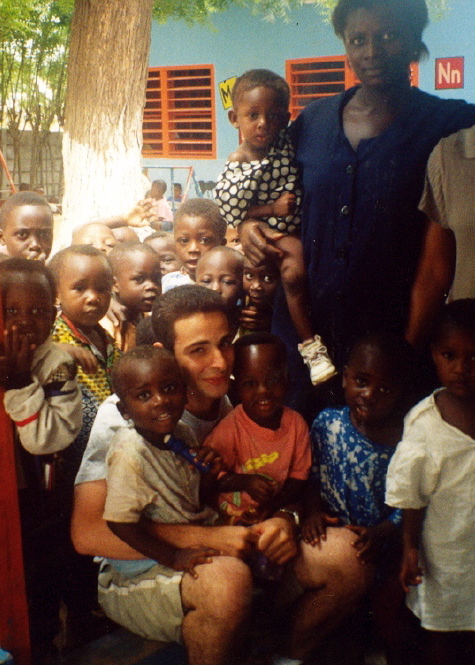
School for street kids in Ghana © Gennaro Salamone
Do you see a significant change in students from the start to the end of the program? Explain.
Dr. Brookins: Absolutely. In the ways mentioned above, and, by the sheer fact that students slow down. The slow their thinking and reacting. Their perceived need for immediate gratification is changed as well. Students gain a perspective on the world that becomes more genuinely inclusive of other people because they have made a human connection with those people. Because students resist this for so long these changes continue to mostly occur after returning to the US.
What were the most significant changes that you’ve made from the early programs to the new ones?
Dr. Brookins: In Ghana we’ve always had home stays and according to the students they have always been the most beneficial part of the experience. Not all programs do that so the “change” has been not to make that change. In addition to West Africa (Ghana, Togo, Benin, Nigeria) we’ve been to East Africa (Kenya, Uganda, Rwanda and Tanzania), and Southern Africa (Botswana, Namibia and South Africa). Each program is different and, for instance, some of the programs have not provided the opportunity for staying with host families. What we’ve learned is that it is importance that each experience emphasizes making authentic and extended connections with the local people and culture, teaching about that, and placing the experience in contrast to the US experience and the future for development for the host country.
___________________________________________________________________________________
Gennaro Salamone is the founder and editor of Enduring Wanderlust. Feel free to contact him with questions, comments, or inquiries with reference to contributing an article or photograph for publication.
Receive our free content by e-mail directly to your inbox or through an RSS reader.
A Poconos Weekend Getaway
February 1, 2011 by Gennaro
Filed under Destinations, Features
The Poconos Mountains is a popular recreational destination located in northeastern Pennsylvania. It is especially well-liked among local and regional visitors as it is within a couple of hours of several high population centers. Tourists arrive for a variety of reasons including camping, gambling, skiing, and romantic getaways. This particular trip involved a short drive from New York City and a stay at a couples resort called Paradise Stream Resort, which is one of three couples resorts under the Cove Haven Resorts umbrella.
Lakeside Accommodations @ Paradise Stream Resort © Gennaro Salamone
Paradise Stream is considered the most modern of the three couples getaways — each of which has similar theme-based rooms, outdoor activities, and on premises activities for two. During our stay, activities ranged from ice carving and wine pairing to carriage rides and outdoor photography. We also took a fun paddleboat ride on the lake above with its playful ducks diving for food. Though the activities are plentiful including all-inclusive nightly entertainment like comedian Brad Garrett of Everybody Loves Raymond fame, the rooms are likely the main draw for couples.
Heated heart-shaped pool + 7-foot champagne glass whirlpool © Gennaro Salamone
The resort rooms come in all shapes and sizes, but The Champagne Tower lodging is the most interesting. Walking through the hotel door reveals a 7-foot champagne glass whirlpool next to a fireplace. Not something you experience often. With that, the heated heart-shaped pool may have been even more enjoyable with its attached sauna.
Even with all the different activities that are available at the resorts — it’s easy to let the weekend pass by mostly relaxing in the comforts of the accommodations. Be it breakfast in bed wearing bathrobes or champagne and strawberries in front of the burning fireplace, Paradise Stream is for couples looking for a fun and stress-free few days. If you’re looking to visit one of the Cove Haven Resorts, February is their Month of Love featuring special packages.
This stay at Paradise Stream Resort was courtesy of the Coven Haven Resorts. The content and opinions in the article are those of the author.
___________________________________________________________________________________
Gennaro Salamone is the founder and editor of Enduring Wanderlust. Feel free to contact him with questions, comments, or inquiries with reference to contributing an article or photograph for publication.
Receive our free content by e-mail directly to your inbox or through an RSS reader.
How to Make Homemade Wine
October 26, 2010 by Gennaro
Filed under Destinations, Features, Food
The winemaking process is uncomplicated, but it requires several steps and a lot of patience. Together with that, making homemade wine requires a few days of labor and months of fermentation in order for the wine to be ready for consumption. While there are slight variations to the process, this is a time-tested method that was learned through my father. It comes from a long tradition of Italian winemakers from a small mountain town in Italy. That knowledge was later brought to the United States.
Step-by-Step Process: How to Make Homemade Wine
Step One: Gathering the Equipment
Purchasing the right equipment is the first step to making homemade wine. It requires:
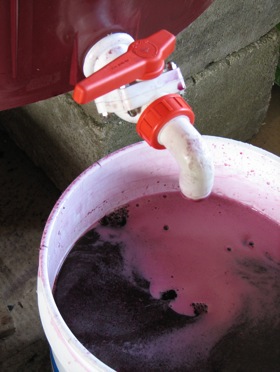
An initial fermentation container that is big enough to hold your crushed grapes. It needs to be a high quality plastic container. Modern versions have a drainage nozzle, which makes it easier to transfer the wine juice to the long-term fermentation jugs.
Long-term fermentation containers (carboys or demijohns) that can be glass jugs or oak barrels. The former tends to be more consistent year-to-year. Depending on your batch of wine the sizes can range from 1 to 15 gallons.
Grape Crusher + Ratchet Basket Grape Press © Gennaro Salamone
Plastic tubing that’s at least 6 feet long is required for transferring the juice between containers.
A manual or motorized grape crusher (de-stemmer optional) is needed for squashing the grapes.
A ratchet basket grape press and pressure discs are necessary to squeeze the remaining juice from the grapes in the primary fermentation container.
While some add yeast or tablets, this process doesn’t use additives.
Plastic buckets are required to capture wine from the press and to move the grapes from the initial fermentation container to the press.
A funnel with a strainer is needed to transfer grape juice from the buckets to the demijohns.
Enough cases of grapes to meet your needs are also necessary.
Step Two: Preparing the Equipment
Prepare a large space that will fit your initial fermentation containers, a basket grape press, and the cases of grapes. You will also need an electrical outlet if using a motorized grape crusher. Be sure to wash all of your equipment and to open the cases of grapes and inspect to make sure that the fruit is healthy and ready to be crushed.
Step Three: Crushing the Grapes and Initial Fermentation Container
Place the manual or motorized grape crusher over the initial fermentation container, which is at least a foot off the ground. One person will be ensuring that the machine is in place and another will be responsible for dumping the cases of grapes into the crusher. Fill the container and leave at least a foot of space at the top. The grapes will stay in this container for about a week. Be sure to use a cover. A sheet or similar will do. Be sure to use a closed space.
Homemade wine © Gennaro Salamone
Step Four: Secondary Fermentation and Transfer to the Secondary Containers
Transfer the wine juice to the secondary fermentation container. If you’re using a modern high quality plastic container for the initial fermentation then simply place a bucket under the drainage nozzle. If not, use a plastic tube from the grape-filled container to the buckets. Place the funnel with the strainer into the demijohn and pour the buckets of grape juice into it. Do not fill them up. An airlock will be need for the secondary container for extended fermentation. Start with paper towels for a day or so then use an actual airlock device. The wine juice will remain in these jugs for at least 4-6 months. It’s best to store it in a cool and dark place.
Step Five: Bottling and Drinking
Once the fermentation process has been completed, you are free to bottle the wine. Rack or siphon off the sediments from the wine using a plastic tube while transferring it to the bottles. Cap tightly. At this point, the vinification process has been completed and it’s ready to drink.
___________________________________________________________________________________
Gennaro Salamone is the founder and editor of Enduring Wanderlust. Feel free to contact him with questions, comments, or inquiries with reference to contributing an article or photograph for publication.
Receive our free content by e-mail directly to your inbox or through an RSS reader.
The Best and Worst Car Rental Companies
October 18, 2010 by Gennaro
Filed under Travel News
What is the best car rental company? According to a survey by Condé Nast Traveler: Hertz, Enterprise, and Avis top the list. The results, which take into account rates, reliability, locations, and vehicle options were not overly surprising as these companies are some of the largest car rental companies. In addition, many of the agencies on the list are at the forefront of new developments in the industry. Hertz recently announced one-way rentals that will allow consumers to drop off a car at an airport instead of an original pick-up spot. This is particularly helpful for international and out-of-state travelers. Enterprise and Avis, on the other hand, are pioneering electric car rentals for the upcoming year.
Hertz Car Rental Counter © Dierk Schaefer
It’s not just travelers who are benefiting from the innovations by the leading car rental companies. Newer companies such as Zipcar are attempting to shift urban centers from car owners and renters to car-sharing members. Their hope is that major cities around the globe will embrace their on-demand mobility model. While this is a popular method in European cities, it will be more difficult to push through in the United States where car ownership is ingrained in the culture. That said, an emphasis on being green has taken afoot in certain segments of the population.
For the companies that didn’t perform well in the survey such as Dollar and Thrifty, it would benefit them to re-evaluate their products and services as it will prevent them from being associated with the worst car rental companies.
___________________________________________________________________________________
Gennaro Salamone is the founder and editor of Enduring Wanderlust. Feel free to contact him with questions, comments, or inquiries with reference to contributing an article or photograph for publication.
Receive our free content by e-mail directly to your inbox or through an RSS reader.
How to Become a Matador
October 12, 2010 by Gennaro
Filed under Travel News
On a trip to Spain, I remember several cities with statues honoring bullfighters. Locals told stories of the heroic Spanish matadors. Watching the bullfighters in the toreo de salón is a popular tourist attraction though some object to it calling the spectacle barbaric. If you find the agility and skill of the torero to be alluring, it’s possible to take an intensive training course that will teach the fundamentals of becoming a matador. That includes fearlessness, graceful movements, and improved coordination.
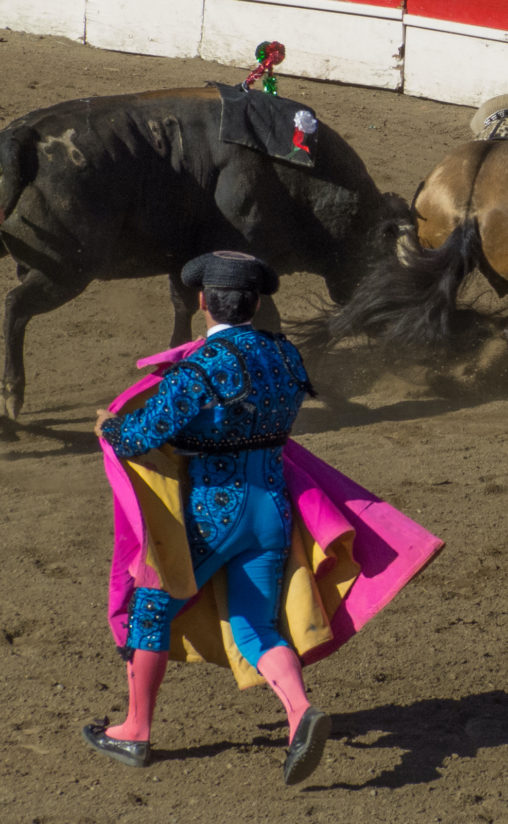
Matador in Spain © Paul Hartrick
Two options for training to become a bullfighter are the Dennis C. Borba Bullfighting School and the California Academy of Tauromaquia. The former offers workshops lasting three days. Be aware that the class doesn’t come without risk. The WSJ reported that one man’s cape got caught under the animal’s hoof knocking him to the floor. Though the trainer, Dennis Borba was quick to intercede. As Ernest Hemingway wrote in Death in the Afternoon, “bullfighting is the only art in which the artist is in danger of death.” The latter choice has intensive classes located in San Diego, California and Mexico. The courses are completely bloodless and focus only on the moves and traditions of the bullfighters.
___________________________________________________________________________________
Gennaro Salamone is the founder and editor of Enduring Wanderlust. Feel free to contact him with questions, comments, or inquiries with reference to contributing an article or photograph for publication.
Receive our free content by e-mail directly to your inbox or through an RSS reader.
Riding an Elephant in Thailand
October 7, 2010 by Gennaro
Filed under Destinations, Features
Chiang Mai, Thailand is the answer. Where to ride an elephant, how to ride an elephant, and where to hug and kiss a baby elephant are the musings. The voyage began with a serene 8-mile bike ride from the rustic Lisu Lodge to the elephant camp. Despite the excitement surrounding the elephant riding, the natural beauty of the Chiang Mai countryside still manages to capture your attention.
On arrival, several gentle giants standing near the river met our group of travel writers. Among the elephants was a pregnant female who managed to carry two of us along the mountainous jungle scenery down the river. The secret to riding this particular elephant was to ensure that she was fed plenty of bananas. Be sure to put aside enough bananas for the entire trip, as her trunk will be jumping back to collect a reward every few steps.
Elephant reaching for Gennaro’s feet + Angela Dollar feeding an elephant © Gennaro Salamone
Behind the pregnant giant was a 3-year old baby elephant that followed along for the journey sans passenger. He spent most of the trip using his trunk to throw dirt over his shoulder ensuring protection against the sun and insects. While the ride along the river was wonderful, the highlight of the day was bonding with the baby elephant at the end. I walked over to the receptive animal and proceeded to hug and kiss him. It’s not every day that you can connect with one of the largest land mammals.
Hugging and kissing a baby elephant © Gennaro Salamone
There are several options that allow for a similar experience. Elephant Nature Park is one of the better choices with over thirty rescued elephants from infants to old-timers. They have everything from day trips to three-week long volunteer stays.
This trip to Thailand was courtesy of the Tourism Authority of Thailand. The content and opinions in the article are those of the author.
___________________________________________________________________________________
Gennaro Salamone is the founder and editor of Enduring Wanderlust. Feel free to contact him with questions, comments, or inquiries with reference to contributing an article or photograph for publication.
Receive our free content by e-mail directly to your inbox or through an RSS reader.
Free Rooms to Honor Veterans
October 6, 2010 by Gennaro
Filed under Travel News
Veterans Day is federal holiday that is observed on November 11 in the United States. Along with Memorial Day, which pays respect to soldiers who died in military service, it honors veterans of the armed forces. The specific date was selected in accordance with the end of the First World War and President Woodrow Wilson’s declaration of remembrance.
Veterans Memorial, Washington DC © Gennaro Salamone
To pay respect to those who fought, a group of over 400 independently owned bed and breakfast inns are providing free stays for veterans on the night of November 10. A valid military or Veterans Administration ID is required for each reservation. To find a participating inn, view the list on B&Bs For Vets. Inn keepers who want to be listed for the promotion can contact Kathleen Panek of the Gillum House Bed & Breakfast in West Virginia. To qualify, at least one room must be provided for the night of November 10, free of charge, to any active or retired military person with appropriate ID.
___________________________________________________________________________________
Gennaro Salamone is the founder and editor of Enduring Wanderlust. Feel free to contact him with questions, comments, or inquiries with reference to contributing an article or photograph for publication.
Receive our free content by e-mail directly to your inbox or through an RSS reader.
Rice Farmers of Thailand Through the Lens
September 14, 2010 by Gennaro
Filed under Features, Photography
Chiang Mai is the largest city in northern Thailand. A combination of natural beauty and countless cultural activities makes the area a popular tourist stop. Travelers have the opportunity to visit local hill tribes, sample delectable local cuisine, and raft along the Ping River. On this day, a local guide led our small group of travel writers on a tour of Lanna or the “land of a million rice fields.”
Follow this photographic journey featuring the Akha hill tribe transplanting rice:
Khum Lanna + Chiang Mai Rice Paddies © Gennaro Salamone
We were set for a sunrise biking tour along the rural country road from San Kwang village to Phrao to visit the local markets. Leaving the charming Khum Lanna, we were met by steady rains that prevented a view of the sunrise. Despite that, the early showers on the emerald-green rice paddies provided a tranquil atmosphere for the sojourn.
Akha Hill Tribe Transplanting Rice © Gennaro Salamone
We visited the local markets, stopping for tea and an interesting traditional drink that consisted mainly of raw eggs, before heading off to the area of the rice paddies where the Akha tribe was transplanting rice. Working in the rice paddies appeared to be labor intensive, but smiles were common among the inhabitants. This work is essential to the economic success of Thailand, which is the world’s biggest rice exporter according to the Bangkok Post.
Local Farmer © Gennaro Salamone + Overzealous Travel Writer (Taken by Ted Beatie)
The highlight of the morning was an opportunity to join the Akha in the rice paddies for some hands-on learning. It’s one thing to observe the nature of the labor, but having your legs ankle deep in mud while bending to stick rice plants into the ground gives a new level of understanding. We were fortunate to have a guide who had relationships with the community. Sometimes, it’s worthwhile to forgo complete independence while traveling.
I was joined on the trip by travel writers: Angela Dollar, Ted Beatie, and Carlo Alcos. Visit and bookmark their websites. After that, view Lake Titicaca photos featuring the Uros people.
This trip to Thailand was courtesy of the Tourism Authority of Thailand. The content and opinions in the article are those of the author.
___________________________________________________________________________________
Gennaro Salamone is the founder and editor of Enduring Wanderlust. Feel free to contact him with questions, comments, or inquiries with reference to contributing an article or photograph for publication.
Receive our free content by e-mail directly to your inbox or through an RSS reader.

Barcelona, Spain