Lao Fishermen on the Mekong

April 3, 2009 by  
Filed under Destinations, Features, Photography

Luang Prabang is a pleasant city in the Lao People’s Democratic Republic. The city is one of the popular tourist stops in this former French colony. The area is perfectly suited for those seeking outdoor activities or a spiritual journey among local monks. Luang Prabang also finds itself on the Mekong River, which is rich in biodiversity. Fishermen can be viewed perfecting their craft on the shores of the 12th longest river in the world.

Follow this photographic journey featuring two of these fishermen:

mekong-river-asia.jpg Mekong River, Laos © Gennaro Salamone

The Mekong River plays a vital role in the economy of several Southeast Asian countries. Laos is particularly dependent upon it with all their major cities located on the river. Luang Prabang, a north-central city, is a particularly interesting spot for a river voyage or to simply watch locals at work.

fishermen-asia.jpg mekong-river-boat.jpg Fishermen, Luang Prabang © Gennaro Salamone

The best time to view the fishermen in action is early in the morning. This is when they catch fish for their families or to sell at the various markets. The men working on the river are very friendly, but rarely speak English. Learn a few Lao phrases to break the ice before asking to photograph them.

lao-fishing-mekong.jpg lao-fishermen-mekong.jpg Fishermen, Luang Prabang © Gennaro Salamone

The condition of their equipment gives some insight into the economics of fishing on the Mekong. Local fisherman often use primative gear that requires a lot of manual labor. That usually makes for a limited catch per day. The men in the photographs remained in the same spot for two hours. They caught six decent-sized fish.

Follow another photographic journey to Pushkar, India.

 
___________________________________________________________________________________
gennaro-salamone-photo.jpgGennaro Salamone is the founder and editor of Enduring Wanderlust. Feel free to contact him with questions, comments, or inquiries with reference to contributing a travel article or photograph for publication.


Receive our free content by e-mail directly to your inbox or through an RSS reader.

Angkor Wat Through the Lens

March 20, 2009 by  
Filed under Destinations, Features, Photography

Angkor Wat is a historic temple complex near Siem Reap, Cambodia. It has been used as a religious temple for several faiths including Hinduism and Buddhism. The structures are locally influenced by the classic Khmer architectural design. With more than eight hundred years of history, Angkor Wat is on almost every must-see list for travelers headed to Southeast Asia.

Follow this photographic journey into the temple complex:

angkor-wat-tomb-raider.jpg angkor-wat-trees.jpg Angkor Wat, Cambodia © Gennaro Salamone

Massive tree roots engulf many of the temple structures especially at Ta Prohm. That’s where scenes from Angelina Jolie’s Tomb Raider were filmed. It’s also one of the most visually pleasing segments of Angkor.

angkor-wat-statue.jpg angkor-wat-statues.jpg Angkor Wat, Cambodia © Gennaro Salamone

The space is filled with lots of detailed figures. Many of them represent Hindu devatas (deities or celestial beings). Along with that representation comes a variety of Hindu stories told through carvings in the stone.

angkor-wat-angelina-jolie.jpg angkor-wat-buddha.jpg Angkor Wat, Cambodia © Gennaro Salamone

Buddhist statues demonstrate later influences at Angkor Wat. At the same time, scattered stones and partial structures show years of wear and tear at the grand temples.

For tourists visiting Angkor Wat, the temple complex has hundreds of structures over a considerable distance. Consider spending several days viewing them. Hiring a motorbike or renting a bicycle is a great way to get around.

View another journey featuring Bodh Gaya, India photos.

 
___________________________________________________________________________________
gennaro-salamone-photo.jpgGennaro Salamone is the founder and editor of Enduring Wanderlust. Feel free to contact him with questions, comments, or inquiries with reference to contributing an article or photograph for publication.


Receive our free content by e-mail directly to your inbox or through an RSS reader.

Cusco, Peru: A Photographic Journey

March 6, 2009 by  
Filed under Destinations, Features, Photography

Editor’s Note: This feature includes a combination of photos by Bella Hobbel and Gennaro Salamone.

Cusco was the historic capital of the Inca Empire. Peruvians continue to proudly point out the remaining aspects of the culture including a durable Inca stone wall. Even today, Cusco has maintained a level of grandeur. That and its close proximity to Machu Picchu make Cusco one of the most popular cities for travelers to South American continent.

Follow this photographic journey through the historical capital of the Incas:

cusco-cathedral.jpg cuzco-cathedral.jpg Cathedral of Cusco, Peru © Gennaro Salamone

The Plaza de Armas of Cusco is filled with beautiful architecture. This gathering place is the location of the city’s cathedral. As with most Peruvian cities, the influence of the Spanish Empire is visually apparent.

procession-peru.jpg procession-cusco.jpg Procession, Cusco © Bella Hobbel

Catholicism has a substantial influence on local culture. Processions to honor patron saints or Jesus Christ are regular occurrences. These processions are a great way to observe locals spending time with their families.

cusco-food-market.jpg cusco-textiles-peru.jpg Indigenous Textiles and Food Markets © Gennaro Salamone

Indigenous textile markets provide travelers with plenty of warm clothing options for the trip to Machu Picchu. Together with the textiles, Cusco has a sizable food market with fresh produce, cheeses, and meats. It’s also a fun place to observe the haggling between locals.

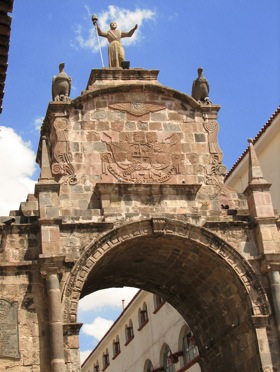
cusco-architecture.jpg Architecture, Cusco © Gennaro Salamone

Cusco’s architecture shows both Incan and Spanish influences. It is, perhaps, the best place in Peru to view this combination. A bonus to travelers is viewing the majestic hills around the city along with the stunning blue skies. Perfect for photographers.

mayan-kids.jpg Local Kids, Cusco © Gennaro Salamone

Cusco is filled with local kids trying to pass the day. It’s a good idea to spend time observing their joy, as you sit in the Plaza de Armas, trying to avoid overexertion and altitude sickness.

View another journey through the floating islands of Lake Titicaca photos or the Bodh Gaya, India photos chronicling the place of Buddha’s enlightenment.

 
___________________________________________________________________________________
gennaro-salamone-photo.jpgGennaro Salamone is the founder and editor of Enduring Wanderlust. Feel free to contact him with questions, comments, or inquiries with reference to contributing an article or photograph for publication.


Receive our free content by e-mail directly to your inbox or through an RSS reader.

Bodh Gaya: Place of Buddha’s Enlightenment

February 27, 2009 by  
Filed under Destinations, Features, Photography

Bodh Gaya, India was the location of Siddhartha Gautama’s enlightenment. The Buddha attained enlightenment sitting under a Bodhi tree. The ancestor of that tree is housed at the majestic Mahabodhi Temple. This World Heritage Site is a must for travelers who are interested in the faith. The grounds are filled with meditating monks, carefully maintained plant life, and eager to learn tourists.

Follow this photographic journey into the home of The Buddha’s enlightenment.

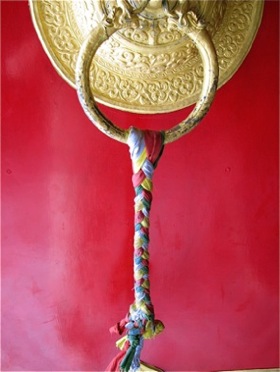
meaning-of-buddhist-knot.jpgbuddhist-knot.jpg Buddhist Temple, Bodh Gaya © Gennaro Salamone

Bodh Gaya is filled with Buddhist temples that were built by governments throughout Asia. Every nation with a significant Buddhist population has built their own temple to pay respect to the place of Buddha’s enlightenment

buddhist-monks-relaxing.jpg Relaxing Monks © Gennaro Salamone

Buddhist monks from a variety of nations make the pilgrimage to the Mahabodhi Temple to meditate under the Bodhi tree. It’s a peaceful respite from the chaos of India’s urban areas.

buddhist-nuns.jpg Bhikkhuni (Buddhist Nuns) © Gennaro Salamone

All Buddhist traditions have Bhikkhuni (Buddhist Nuns). While nuns take the same important vows, their position and stature within the Buddhist community is largely determined by their country.

bodhi-tree-mahabodhi.jpg The Bodhi Tree, Mahabodhi Temple © Gennaro Salamone

The Bodhi tree at Mahabodhi Temple is an ancestor of the original tree that Siddhartha Guatama attained enlightenment under around 530 BCE. Visitors and monks alike wait for falling Bodhi leaves which symbolize good fortune.

mahabodhi-temple.jpgbuddhist-prayer-flags.jpg Prayer Flags, Mahabodhi Temple © Gennaro Salamone

Buddhist Emperor Asoka is considered the founder of the Mahabodhi Temple. It’s a brilliant architectural structure. The central tower rises to over 180 feet (55 meters). Lucky prayer flags are seen throughout the complex.

buddha-statue-india580.jpg Buddha Statue © Gennaro Salamone

Bodh Gaya, India is home to thousands of Buddha statues of various sizes. Each statue has a unique meaning in connection with the Buddha’s positioning and facial expression.

monk-praying-chanting.jpg Buddhist Monk Chanting © Gennaro Salamone

Buddhist chanting takes place regularly under the Bodhi tree. Pilgrims and tourists alike take in the beautiful rhythms of the chants. Many visitors and monks begin to pray at this moment.

Read about three perfect places to meet Buddhist monks then follow another photographic journey to Angkor Wat, Cambodia.

 
___________________________________________________________________________________
gennaro-salamone-photo.jpgGennaro Salamone is the founder and editor of Enduring Wanderlust. Feel free to contact him with questions, comments, or inquiries with reference to contributing a travel article or photograph for publication.


Receive our free content by e-mail directly to your inbox or through an RSS reader.

Canon Powershot SX10 IS

December 18, 2008 by  
Filed under Photography, Travel Gear

The Canon Powershot SX10 IS is equipped with 10 megapixels of resolution along with a superior 20x Optical Zoom lens. The zoom is powerful enough to photograph distant sites and individuals without having to haul around a group of heavy lenses. While it’s always best to ask permission before shooting a photograph of a local, its possible to use this function to snap shots of intriguing figures without causing too much of a stir.

Though its slightly bigger than it’s predecessors, the new model remains the perfect size to carry along on your trips around the world. With that increased size comes the previously mentioned increase in zoom and a 2.5 inch Vari-angle LCD for flexible viewing.

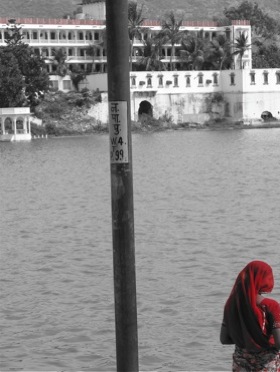
Two other unique features that separates this camera from many of its competitors are the ability to capture high-resolution images while recording movies and the color accent mode (see below).

color-accent-photos-picture.jpg Color Accent Photo @ Luang Prabang, Laos © Gennaro Salamone

canon-powershot.jpg

Purchase: Canon Powershot SX10 IS

Editor’s note: This article contains an affiliate link.
___________________________________________________________________________________
gennaro-salamone-photo.jpgGennaro Salamone is the founder and editor of Enduring Wanderlust. Feel free to contact him with questions, comments, or inquiries with reference to contributing a travel article or photograph for publication.


Receive our free content by e-mail directly to your inbox or through an RSS reader.

« Previous Page